
Losing Ground, James Rutenbeck interviews John Ferrari Jr. in 2026
Interview with John Ferrari, Jr.
24 June 2026
Editor's Note by James Rutenbeck
In 1986, I traveled to Ogden, Iowa to research a nonfiction film adaptation of "Years of Struggle: The Farm Diary of Elmer G. Powers, 1931–1936."
Powers farmed near Ogden in Boone County during the Great Depression, and his diary chronicled the hardships and resilience of one Iowa farm family during those years. I set out to make a film that would draw parallels between the Depression-era experiences from the diary and the agricultural crisis then unfolding across the Midwest.
But as I talked with more farmers and realized the urgency of the moment: soaring interest rates, mounting debt and the prospect of foreclosure, the film evolved into an observational film about farm families struggling to survive in the present.
During my research in the Ogden area, I met a Mrs. Hutchinson, who suggested that I speak with the Ferrari family in Pilot Mound. At the time, John Ferrari, Jr. and his parents, John and Jane Ferrari, were confronting the possible loss of their farm. Their story became Losing Ground.
As filming continued, the 1988 presidential campaign was beginning to take shape, and the farm crisis had become a national political issue. The final sequence in Losing Ground is a political rally staged by the Gephardt campaign on the Ferrari farm. Members of Gephardt's advance team who appear in the film included Donna Brazile and Paul Begala, both of whom would later become prominent figures in Democratic politics.
Our time making the film with the Ferraris evolved into a friendship that has continued for decades. Nearly fifty years later, I asked John, Jr to reflect on that period and on what has happened since
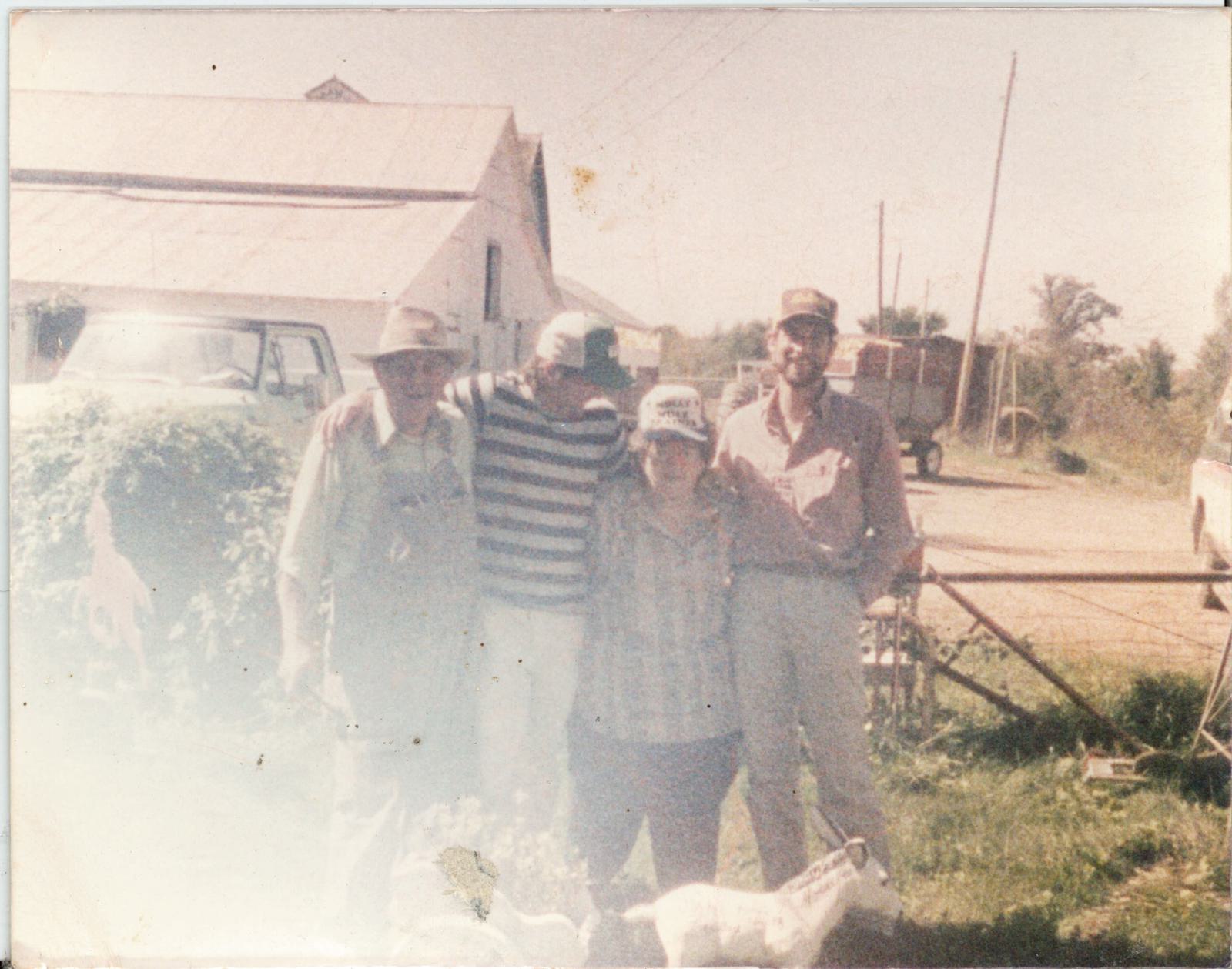
Q: John, forty years have passed since cinematographer Ned Johnston and I first came to your family's farm to make Losing Ground. I grew up in DeWitt, a small town in eastern Iowa and spent my summers working on farms and as a detasseler for seed companies. By the mid-1980s, many of my former classmates were struggling to hold onto their farms. To make ends meet, they were taking second jobs as plumbers or working night shifts in factories in Clinton and the Quad Cities. They were deeply discouraged and saw little future in family farming. When I came to Boone County, I recognized those same concerns in the stories I was hearing from other young men. Johnny, you were a young man when we met, and you shared that same dream of carrying on your family's farming legacy. What do you remember about that time?
A: I am now 63 years old. I think back at the time I was 23 years old and which my parents John & Jane Ferrari were going thru an unforgettable path in life that changed their life with memories that they wish they could not remember. The time was in the 1980s farmers were going thru a rough time because of high interest rates. Rates like above twenty percent. Even farmers that had farm ground paid for were struggling as your banker and you hated this word the banker would say: “Cash Flow.” Cash Flow* meant the balance of income vs expense to show a profit.
For my parents it truly was a difficult time. They tried to work with the bank lender to get cheaper interest. They been doing business with that bank all their life.
I can remember that day when we had a meeting about the future of my parents’ loan.
The banker would not give my parents any cheaper interest. Interest was above twenty percent.
* Cash flow is the money coming into and going out of a business, showing whether it generates enough cash to pay its bills and repay debt. Unlike assets such as land or equipment (which the Ferraris owned), cash flow measures the cash available to meet ongoing financial obligations (where the family came up short).
Q: What did the farm mean to your family?
A: Growing up on a farm people that never lived on a farm truly do not understand the bond that children that are raised on a farm. Children grow up being more responsible because you had to work on the farm. You seen animals being born then seeing death of animals. You learn not everything is a bunch of roses. You understood about life growing up on a farm because you seen the heartaches and the celebration of life on the farm. That not knowing when a kid that your farm experiences would help you later on in your life.
My parents did not know what to do as they could not make cash flow. We met with Farmers Mutual Association (FMA)**, and they agreed to give my parents interest at seven percent. They could pay their loan payments. Marty Vanderploeg, who lived in Ames at the time, co-signed our farm note and without him, we would have not saved our farm. When my father passed away Marty sent us money to buy a monument.
That time farmers were exempt from the bank taking ten thousand dollars machinery for each spouse. So my parents would keep twenty thousand dollars of machinery. The bank knew that and my parents offered with the help of Farmers Mutual Association to pay off the loan all except twenty thousand dollars. We thought our problems were over. That just was a start to what to be the most horrible experience anyone could go thru.
The bank told us you cannot cash flow but your land is twice as value in what you owe. We bankers look out the best solution on our side. In your cause it best to foreclose on you because you do not owe much but you cannot cash flow. The bank turned down the offer from Farmers Mutual Association. The banker then told us they were going to start the process of foreclosing on us.
My parents had to do something. They heard about a lawyer in Cedar Rapids that specialized in farm bank bankruptcies. I went with them. The lawyer wanted money up front before he would take the case over. I gave my parents several thousand dollars to stop the bank foreclosing on them.
** Farmers Mutual Association is a type of cooperative insurance company owned and operated by its policyholders. Historically formed in the late 19th century by rural neighbors, these organizations were created to provide affordable insurance coverage for farms, homes, and agricultural property that traditional insurers refused to cover.
Q: Readers might be interested in how your family become involved in our film.
A: About this time the phone rang. It was from a lady named Hutchinson near Ogden, Iowa. She wanted to know if we be interested in meeting someone that might want to do a documentary film on us.
We did not know what to say, but we agreed to meet with you. We met and my parents’ thoughts were (especially my father Johnnie), “Well if these (filmmakers) would help the family farmer by exposing what is truly behind being a family farmer and how life is, it would be worth it.” We agreed and that first time meeting eventually brought a friendship that our family cherished.
Q: What was it like being filmed?
A: You filmed us doing what a farmer does in the fall of the year. Getting ready for harvest. It was different having cameras following you but we hoped that we doing this would somehow expose what issues the family farmer goes thru. I was 23 years old at the time. My passion was farming and coon-hunting. I had no interest in dating women. I think you and Ned came back in November and we informed them what has happened since they were here last. They filmed me hunting.
After you left it was a trying time. The bank shut us done we could not sell anything to get income to eat. Luckily, we had a big garden and took a steer to the butcher to get meat for us to eat. We lived like this for five years sometimes wondering where are next meal was going to be. Without having a garden, we could not have lived those five years of hell. You could tell it was taking its toll on my parents. Heck it was taking a toll on me.
Q: That January your sister Lisa called me to tell me about a Dick Gephardt for President campaign rally that was being planned to take place on your farm later that month. It turned out to be the final sequence of the film. What do you remember about his visit, and what were your hopes at the time?
A: The Dick Gephardt campaign wanted to come for a visit on our farm. First it was only a rally but Dick wanted to eat with us. We wondered what we would have in common with in the future the majority leader of the United States. He was the nicest man, understood farming and a rising star in the political arena. Our hopes were that we could explain the struggles what goes on the family farm and what the family farm means to a family that lives on the farm. After talking to Dick Gephardt, he totally understood about farming because he spent summers in Kansas with his aunt on the farm.
Years later he ran again and with my father in a wheelchair I took my father to Iowa Falls where he was holding a rally. Richard saw my father in a wheelchair and immediately came to him and gave him a hug. He remembered my mom’s name, my sister’s name and myself.
Richard told me that if he did not win the nomination for his party he was going to get out of politics. I told President Clinton Richard Gephardt would have made the best President the United States ever had. President Clinton responded, John yes you are correct.
Q: What do you remember about the sale of the farm?
A: Finally the day came for the farm sale of the land in which was my father’s place he grew up on. It was his mom’s family farm. He lost his parents farm all from a greedy banker who would not settle to get a FMHA loan.*** Five years going thru hell all because of twenty thousand dollars the bank did not want to take off the loan to get a FMHA loan.*** My father seen people he knew all his life at the sale. That made things worse because he felt bad about losing his parent’s home place.
That day of the farm sale was one of the few times I seen my dad cry like a baby. I never seen him shed many tears but in his inner self he failed his mom and dad because of twenty thousand dollars. He cried in the home he grew up on most likely the last time he would set foot in the home he grew up in.
Today the house still stands and the building site. Family goes by and sees the farm decaying like the family farmer has. He lived that memory until he passed away.
*** FmHA (Farmers Home Administration) loan is a federal loan program that offered farmers lower-interest, more flexible financing for land purchases and farm operating expenses when conventional bank loans were unavailable or unaffordable.
Q: How has rural Iowa changed since then?
A: The family farm as we knew it 30 years ago is no longer in existence. Grain trucks are now replaced with semi-trucks in the field. Semi-trucks can hold thousands and thousands of bushels. Equipment that cost hundreds and hundreds of thousands of dollars are needed to operate a farm. To operate a farm, you have to have millions dollars of farm equipment.
Children now have to be bussed. Rural schools cannot stay open because of declining enrollment. Also, when the school goes, your grocery store goes, then your church goes, simply because the family farm is no longer in existence. The neighbor you had back when the family farm was in existence you visited with--now you have neighbors so far away. Sometimes you do not even know their name. Rural hospitals are struggling to survive. Ambulance services take longer times to reach rural America.
Q: What happened after the crisis?
A: My parents still lived on the farm house and with them selling the farm to their children they own nothing. My father had a heart attack and had to have a bypass operation. Later he had to have parts of his foot removed because of diabetes. He passed on June 17, 2006.
My mom still lived at her home until she could not. She passed on July 22, 2009.
Watching your parents take their final breath you will never forget that experience. That left the two of us. I promised my father not to sell the farm.
Q: What keeps you going today?
A: It wasn’t the best time of our lives but we finally got it settled. I had to buy my sister out. I still owe over two hundred thousand dollars.
My dream was to meet a nice attractive lady that has morals to share my farm with. My dream would be able to go to Italy and meet my extended cousins, to see the original Ferrari Family Farm in Mancasale Italy. Visit the Catholic Church in Massenzatico, our family church having records going back to the 1600s. To visit my good friend Davide.
Life goes on but you have to have dreams but possibly my dream will come true.
Editor's Note: Mancasale and Massenzatico are neighboring villages near Reggio Emilia in northern Italy. The Ferrari family lived and farmed there for generations before immigrating to the United States.

